
Maybe the fire never reached your house, but it came close enough to blacken the base of a few trees, scorch the needles on a big Douglas fir, or leave a line of oaks along your driveway looking rough. Now fall is here, the first real rains are on the way, and you are left with a hard question: are these fire damaged trees going to recover, or are they waiting to fall? It is a worry we hear a lot from homeowners in Willow Creek and the rest of inland Humboldt County.
We understand how stressful it is to look at a tree you have lived with for years and not know whether it is safe. The good news is that fire damage follows patterns. Some signs point clearly to a tree that will not make it, while others look alarming but are often survivable. This guide walks you through what to look for, why the wet season changes the risk, what you can safely wait on, and when it is time to call a certified arborist who knows fire-weakened timber.
Why Fire Damaged Trees Need a Second Look Before Winter
A tree that survived the flames is not always a tree that survived the fire. Heat can kill living tissue under the bark without leaving much visible damage, and roots near the surface can be cooked even when the trunk looks fine. That hidden damage often does not show up until months later.
Why Fall Timing Matters in Willow Creek
Inland Humboldt County dries out hard in summer, then shifts to heavy rain and wind as fall turns to winter. Saturated soil loosens its grip on roots, and wind loads a weakened crown. A tree that stood fine through a still, dry September can fail in the first big storm.
Hidden Damage You Cannot See From the Ground
The cambium is the thin living layer just under the bark. When fire heats it long enough, that layer dies, and the tree slowly starves even if the leaves stay green for a while. Burned roots and charred bark near the base can also open the door to decay that weakens the trunk from the inside.
Why Waiting Too Long Can Cost You
If a tree is truly dead, it only gets more dangerous and more expensive to remove over time. Dry, brittle wood is harder to take down safely, and a tree that has already started to fail may need extra equipment and care to remove around a house or power line.
What Are the Warning Signs of Fire Damaged Trees?
Knowing what to look for helps you sort your trees into “probably fine,” “keep an eye on it,” and “needs a professional now.” Here is what we check first on every fire-affected property.
Crown Scorch on Conifers
Scorch is the browned or reddened foliage left behind by heat. According to the UC ANR Fire Network’s guide to assessing fire-injured trees, conifers that lose most of their crown to scorch, roughly three quarters or more, are very unlikely to survive. Needles that were burned away completely or bent in one direction by the heat are another strong sign of lethal injury.
Char on the Trunk and Base
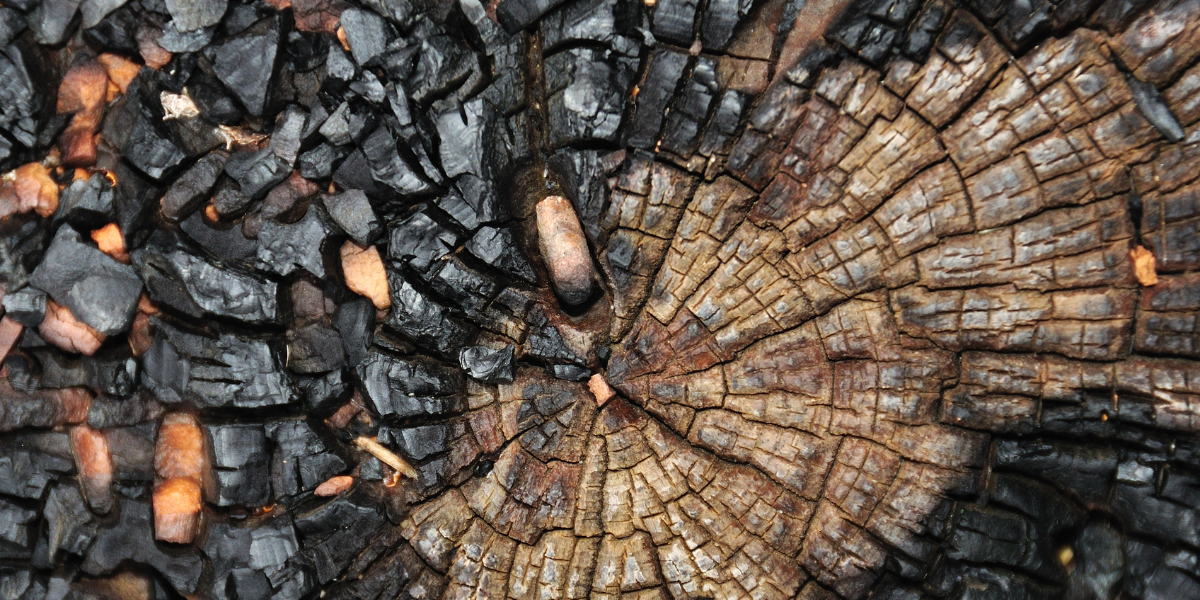
Light, shallow char on thick bark is often cosmetic. Deep char that has burned into the wood, or char that wraps most of the way around the base, is a much bigger concern. Look closely at where the trunk meets the soil. That is where heat tends to linger longest.
Cracks, Cavities, and Burned-Out Roots
Fire can hollow out the base of a tree or burn through surface roots, leaving a cavity you can see into. Any tree with a burned-out base, a new lean, or cracked soil around the roots should be treated as a potential hazard, especially if it could reach your home, driveway, or a road.
Can a Fire Damaged Tree Recover on Its Own?
Yes, sometimes. This is where a lot of homeowners are surprised. Not every blackened tree is a lost cause, and removing a tree that would have recovered is money you did not need to spend.
Hardwoods Often Bounce Back
Oaks, madrones, and other hardwoods are tougher than they look after a fire. The UC ANR guidance notes that hardwoods can lose all of their leaves and still push out new growth, sometimes in the same season. A scorched oak that looks dead in October may leaf out again in spring.
Conifers Are Less Forgiving
Douglas fir, pine, and other conifers generally cannot regrow a crown the way hardwoods can. If a conifer has lost most of its green needles, its odds drop sharply. A thick-barked, mature tree with light scorch has a much better chance than a young, thin-barked one.
When Waiting a Season Makes Sense
Judging whether a tree will survive is usually easier in the next growing season. If a tree is not leaning, is not near anything it could hit, and shows only moderate damage, waiting until spring to see how it responds is often a reasonable, money-saving choice. The key word is “if.” A tree that could fall on your house is not one to wait on.
When Should You Remove Fire Damaged Trees?
Some trees need to come down, and it is better to plan that removal than to react to it after a storm. Here is how we think about timing.
Trees That Threaten People or Structures
Any fire damaged tree that could reach your home, outbuildings, driveway, or a public road deserves an assessment before winter storms arrive. If it shows severe scorch, deep char at the base, a new lean, or a burned-out cavity, removal is usually the safest choice.
Trees Near Power Lines
Burned trees near overhead lines are a special case. Never try to cut or climb near energized lines yourself. PG&E handles the main distribution lines, and our crew holds Utility and Powerline Clearance Certification for the kind of work that has to happen close to them safely.
Dead Timber With Remaining Value
On larger parcels, fire-killed conifers can still have timber value if they are harvested before insects and decay set in, which generally happens within about a year. If you have acreage around Willow Creek, this is worth a conversation before the wood degrades. We hold a Class A Timber Operator License, so logging and salvage are part of what we do.
How 3 Dads Assesses Fire Damaged Trees
Fire-weakened trees behave differently from healthy ones, and they need to be evaluated and cut by people trained for it. That is why this kind of work is close to home for our crew.
Credentials That Fit the Job
3 Dads Tree Service is led by an ISA Certified Master Arborist, and our team is AOTF Fire Weakened Timber Certified and AOTF Double Cut Certified. In plain terms, that means we are trained to read fire damage accurately and to take down compromised trees without putting your property or our crew at risk. You can learn more about our certified arborist services and how an assessment works.
An Honest Recommendation, Not an Upsell
We try to find the most economical solution for your property, not the most lucrative one for us. If a tree is likely to recover, we will tell you so. If only one of five trees truly needs to come down, that is the one we will recommend. Your trees. Your decision. Our honest read.
Local Crew, Local Knowledge
We are three local dads who live and work in Humboldt County, and we serve homeowners throughout the region, including our neighbors out on Highway 299. See how we help with removal, excavation, and cleanup on our Willow Creek tree service page.
What You Can Do Right Now
You do not need to wait for an arborist to take a few simple, safe steps.
Walk Your Property With Fresh Eyes
Take photos of any tree with scorch, char, or a lean. Note which ones could reach your house, vehicles, or where your family spends time. Those are your priority trees.
Keep Clear of Obvious Hazards
Stay out from under trees with burned-out bases or hanging limbs. Keep kids and pets away from them, and do not park under them during windy weather.
Schedule an Assessment Before the Storms
A professional look now gives you options. You can plan removals on your timeline instead of dealing with an emergency in the middle of a December storm.
The Bottom Line on Fire Damaged Trees
Fire damage is not always what it looks like. Hardwoods often recover, conifers with heavy scorch usually do not, and the most dangerous damage is often hidden at the base and roots. The trees that matter most are the ones close to your home, driveway, or power lines, and those deserve a trained eye before winter weather sets in.
If you are not sure which of your trees are safe, you do not have to guess. Our certified, family-run crew will walk your property, explain what we see in plain language, and give you an honest, no-obligation recommendation. Contact 3 Dads Tree Service or call (707) 506-6602 to schedule your free estimate and get peace of mind before storm season.