
If you think lightning hit a tree in your yard, don’t guess. A lightning-struck tree can drop heavy limbs or collapse without warning. In this blog post, you’ll learn how to tell if a tree was struck by lightning. If you need a quick inspection or removal, call 3 Dads Tree Services at (707) 506-6602 for professional tree services in Eureka, CA.
Signs You Need To Check for Lightning Damage
After any major storm, walk your property and look for anything out of place. Burn marks, stripped bark, leaning trunks, or sudden leaf wilt could point to a lightning strike. If something doesn’t look right, use the symptoms below to assess the tree lightning impact and decide what to do next.
6 Tree Lightning Strike Symptoms
Identifying lightning tree damage starts with knowing what to look for after a storm. These six signs can confirm whether a strike hit your tree and what kind of damage it caused.
Sign #1: Bark Stripped in Vertical Lines or Scorched in Patches
A common sign of lightning-struck trees is bark damage in long strips or scorched patches. Lightning forces water in the bark to boil and explode. This blasts bark off in vertical strips and leaves behind flaking or scorched edges.
Sign #2: Exposed Wood That Appears Burned, Cracked, or Blackened
Exposed wood that looks blackened or cracked means lightning burned through the bark and scorched the inner layers. These scars reveal deep internal damage that weakens the trunk and makes the tree more likely to fail during high winds.
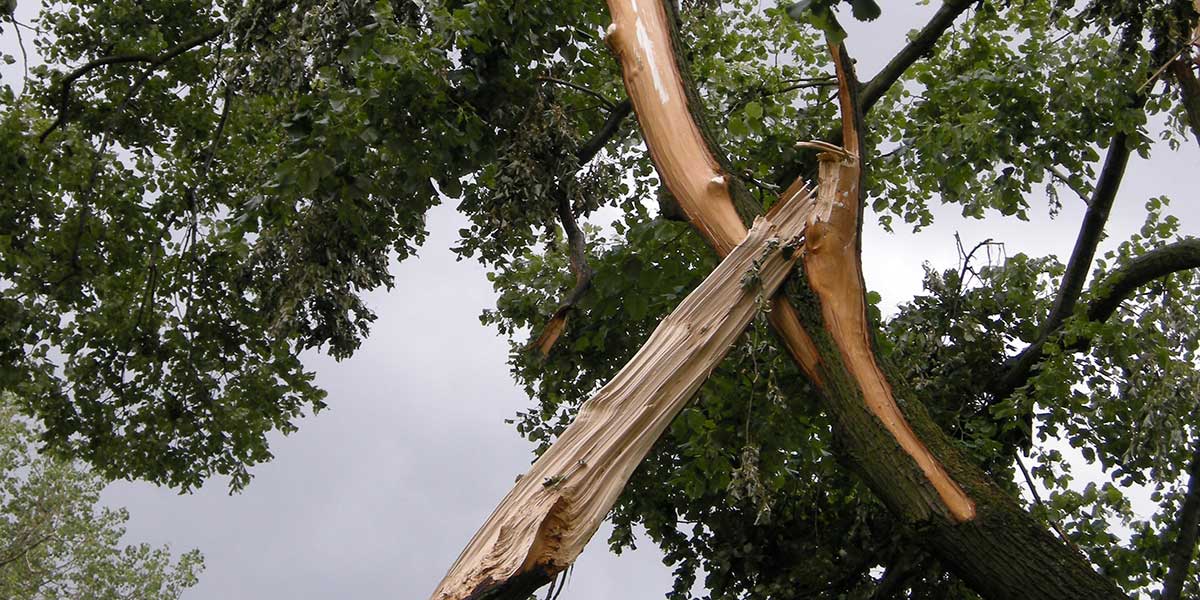
Sign #3: Splintered, Broken, or Loosely Attached Branches
Lightning strikes force a shockwave through the canopy that fractures limbs and weakens their attachment points. Splintered or partially detached branches pose a serious safety risk because they can fall without warning during wind or rain.
Sign #4: Leaves That Wilt, Curl, or Turn Brown Suddenly
Leaves that wilt, curl, or brown within a day of a storm show that lightning disrupted the tree’s water transport system. These symptoms often appear across the upper canopy and indicate internal damage that affects the tree’s ability to survive.
Sign #5: Shifting Soil and Exposed Roots
Disrupted soil, visible root flare, or leaning trunks point to underground damage from a lightning strike. When energy travels down the trunk into the roots, it can destroy support structures and cause sudden tree failure. In rare cases, lightning strikes can actually help a tree grow stronger.
Sign #6: Crystallized Bubbles and Cracks on the Bark
Blisters, sap streaks, or crystallized resin on the bark show that internal moisture boiled and forced its way out through cracks. These patterns often appear near vertical splits and help confirm whether a tree was struck by lightning.
Call 3 Dads Tree Services If You Suspect Lightning Damage
Still struggling learning how to tell is a tree was struck by lightning? Call 3 Dads Tree Services to schedule an inspection and find out exactly what happened and how to fix it. To learn what to do after a strike, check out our other blog post on saving a dying tree.