
By November, the rain is back, the fog hangs around longer, and the trunks and limbs in your yard start turning a brighter shade of green. If you have been looking at the moss on trees around your property and wondering whether it is slowly hurting them, you are not alone. It is one of the most common questions we hear from homeowners in Eureka and across Humboldt County this time of year.
We understand the worry. You want to protect your trees, and nobody wants to pay for a fix that was never needed. The short answer is reassuring: in most cases, moss is harmless. But heavy growth can sometimes point to a tree that is struggling, or hide damage you would want to know about before winter storms arrive. This guide covers why moss thrives here, how to tell moss from lichen, when it signals a bigger problem, and whether removing it is worth your time.
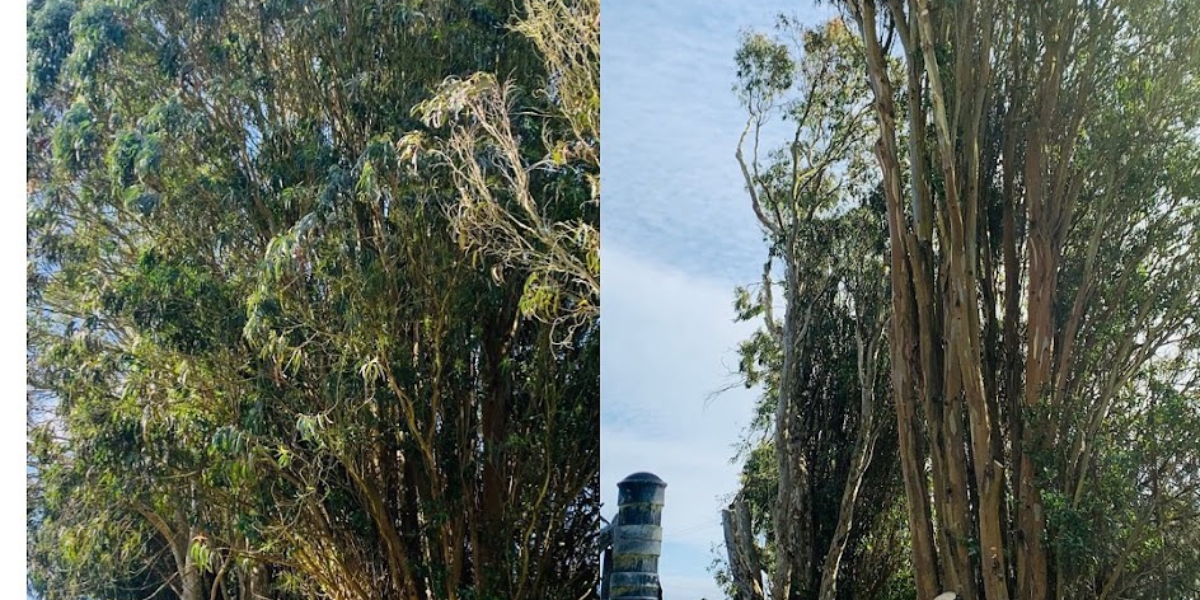
Why Moss on Trees Is So Common in Eureka
Moss needs three things to thrive: steady moisture, mild temperatures, and a surface to cling to. Eureka offers all three for most of the year. Our wet winters, long stretches of coastal fog, and cool summers keep bark damp far longer than in drier parts of California. That is why moss can cover a trunk here in a few seasons when the same tree inland might stay nearly bare.
Shade plays a role, too. The north side of a trunk, lower limbs under a dense canopy, and trees planted close to a house or fence all stay wet longer after each storm. Older trees also tend to carry more growth, because their bark expands slowly and gives moss years to settle in. Sprinklers that hit the trunk all summer add even more moisture.
So if your oak, maple, fruit tree, or alder looks greener every winter, that alone is not a reason to panic. On the North Coast, a little moss is simply part of the landscape.
Is Moss on Trees Harmful to Your Tree?
In most cases, no. Moss does not have roots that reach into the wood, and it does not pull water or nutrients from the tree. It uses the bark only as a place to sit, collecting moisture from rain and fog. According to the University of California’s guidance on algae, lichens, and mosses, these growths are generally harmless to trees, and control is not needed to protect a tree’s health.
That same guidance makes an important point, though. Heavy growth can be a sign that a tree is growing more slowly than it should. A vigorous tree adds new bark quickly, which keeps moss and lichen less noticeable. A tree that has slowed down, from age, poor drainage, root damage, or disease, gives that growth more time to build up.
In other words, moss is rarely the cause of a problem. Sometimes it is a clue. The real question is not “how do I get rid of the moss?” but “is the tree underneath it healthy?”
Is It Moss or Lichen, and Does the Difference Matter?
Homeowners often use the word moss for anything green or gray growing on bark. In Humboldt County, much of what you see is actually lichen. Moss is soft, green, and spongy, with tiny leaf-like structures, and it usually grows in thick mats. Lichen is a partnership between a fungus and algae. It tends to look flat, crusty, leafy, or hair-like, and comes in gray-green, pale yellow, or blue-green shades.
For your tree’s health, the difference matters less than you might think. Neither one is a parasite, and neither feeds on the tree. Both are signs of clean, humid air, which the North Coast has plenty of.
Where the difference can matter is in what you notice next. Lichen often looks more dramatic on bare, leafless branches in winter, which leads some people to assume the lichen killed the limb. Usually, it is the other way around. The branch died or declined first, the extra light reached the bark, and lichen moved in. That is why a limb covered in lichen deserves a closer look at whether it is still alive.
When Moss on Trees Points to a Bigger Problem
Most moss is cosmetic. Still, a few situations call for a second look, especially heading into the windiest, wettest months of the year.
Warning Signs to Check Alongside the Moss
Walk around your tree on a dry afternoon and look past the green. Pay attention if you see a thinning canopy, more deadwood than last year, or branches that leafed out poorly in spring. Mushrooms or soft, crumbling wood at the base of the trunk can point to decay in the roots or lower trunk. Sap leaking from cracks, peeling bark, or sudden lean are also worth noting.
Soggy soil is another clue. If water pools around the base of the tree for days after a storm, the roots may be sitting wet too long. That kind of stress slows growth, which is exactly when moss and lichen tend to pile up. If you notice several of these signs on the same tree, the moss is likely telling you something worth acting on before the next big storm.
When Thick Growth Hides Damage
Heavy moss can cover cracks, cavities, and old pruning wounds that would otherwise be easy to spot. A limb that looks solid under a thick green coat may have a split or soft spot you cannot see. During a Humboldt County storm, saturated moss and wet foliage add weight to limbs that may already be weak.
If a large limb hangs over your roof, driveway, or a spot where your kids play, it is worth having someone check what is under the moss before winter winds test it.
Should You Remove Moss From Your Trees?
For most trees, removal is not necessary. Scraping, pressure washing, or wire brushing can do more harm than the moss ever would, because it can damage bark and open the door to insects and disease. If you want less moss, it usually works better to change the conditions it loves than to attack the growth itself.
A few simple steps help. Keep sprinklers from hitting the trunk. Improve drainage around the root zone if water tends to pool. Hold off on heavy, quick-release nitrogen fertilizer, which pushes soft growth without fixing the real issue. Selective pruning can open up the canopy and let in more air and light, though the UC guidance notes that thinning may reduce moss while encouraging more lichen.
Some products are labeled for moss and lichen control, but they are rarely worth it on a healthy tree. They also need careful use near creeks, ponds, and storm drains, which are everywhere in Humboldt County. When in doubt, focus on the tree’s overall health instead.
How a Certified Arborist Can Help
If you are not sure whether the moss on your trees is just moss or a sign of something deeper, an inspection takes the guesswork out of it. Our certified arborist services in Eureka are led by an ISA Certified Master Arborist who can look at the bark, canopy, roots, and soil together, not just the green growth on the surface.
From there, we will tell you plainly what we see. Sometimes the answer is that your tree is healthy and the moss can stay. Sometimes a dead limb needs to come down, drainage needs attention, or the tree would benefit from a care plan through our tree and plant healthcare services. We always look for the most economical fix rather than the most expensive one. No pressure. No upselling. Just a straight answer about your trees.
Look Past the Moss This Winter
Moss on trees is a normal part of life in Eureka, and on its own it rarely harms your tree. What matters is the health of the wood and roots underneath. Watch for thinning canopies, dead limbs, decay at the base, and soggy soil, and skip harsh scraping that can damage bark.
If something looks off, we are here to help. As three local dads with deep roots in Humboldt County, we treat your property the way we would treat our own. Call us at (707) 506-6602 or request your free estimate from 3 Dads Tree Service today.